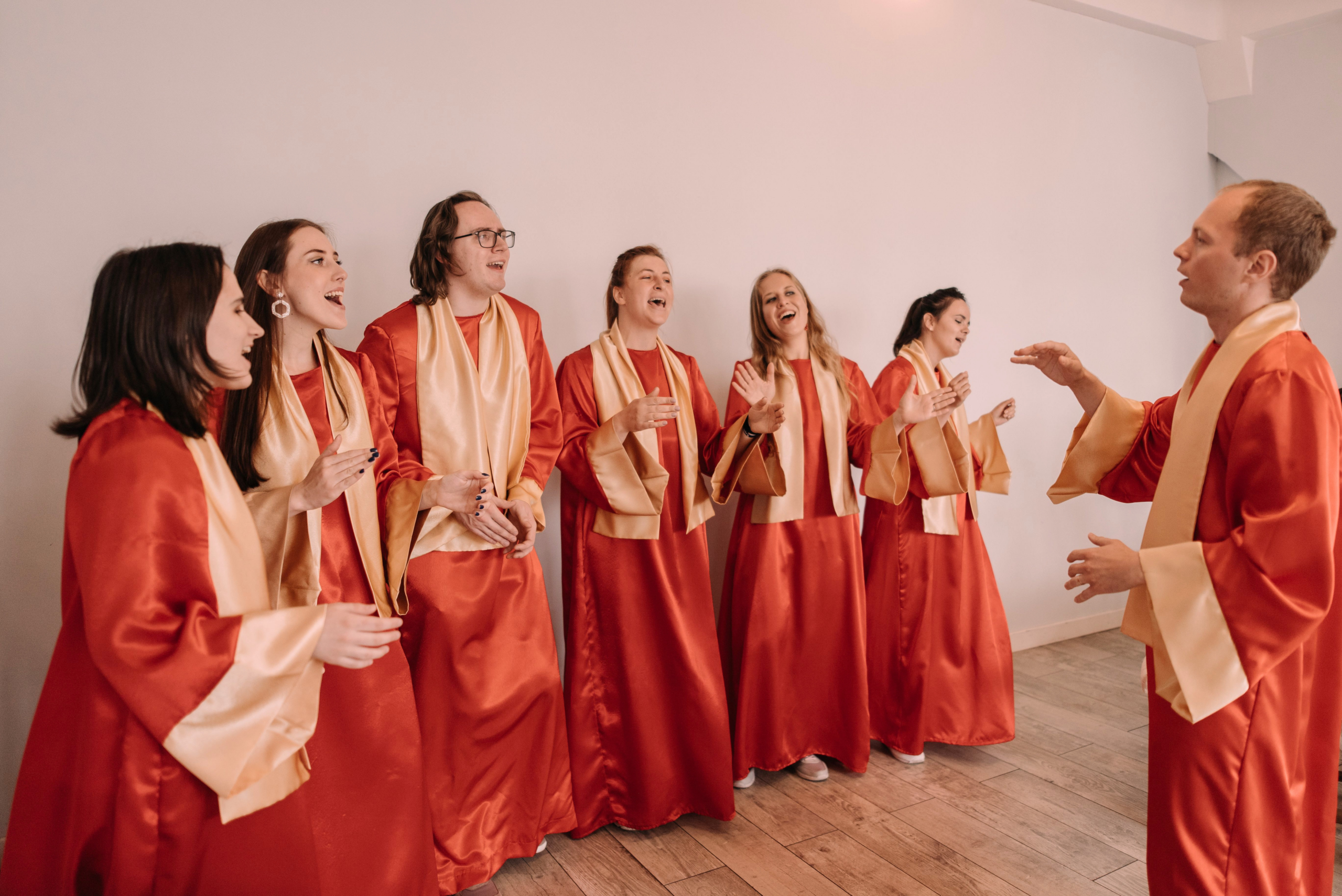
The Nia teacher was quite emotional when she lodge her appeal that dancers be on time for her classes. “We start at 8,” she said allowing no compromise. I told her she was preaching to the choir.
At another event, the leadership body of the organisation appealed for better attendance from members, addressing the few who were present. Again, preaching to the converted.
Sometimes its just unavoidable – you want to rally the troops to get on board with you, so rather say what’s on you mind, than nothing at all, even though you have a committed audience.
The expression preaching to the choir means trying to persuade people who are already convinced of your argument. If you’re giving a speech about the importance of recycling to a room full of environmental activists, for example, you’re preaching to the choir. They don’t need convincing. They’re already singing your tune.
Take me to church
The expression comes from the world of church, where the choir traditionally sits near the clergy and takes part in the service. The preacher’s job, naturally, is to deliver a sermon to the congregation. But the choir is already there, already involved and, presumably, already on board with the religious message. So preaching specifically to them is unlikely to change any minds.
The conversion
The phrase appears to have developed in American English. An early example is found in an 1867 American newspaper, where a politician was described as essentially “preaching to the choir”. The wording evolved over time, with “preaching to the converted” also becoming a common variation.
Today, you don’t have to be standing behind a pulpit to preach to the choir. Politicians do it. Advertisers do it. Social media does it particularly well. A passionate vegetarian posting about the horrors of factory farming to an audience of committed vegans is unlikely to encounter much disagreement. The comments section may simply become an enthusiastic chorus of “Exactly!”
Dare to share
There’s nothing wrong with preaching to the choir, of course. Sometimes it’s useful to reinforce shared beliefs, rally the troops or simply remind people why they’re on the same side.
But if the purpose is persuasion, agreement isn’t the destination – it’s the starting point.
The real test is whether your argument can travel beyond the comfortable circle of people who already agree with you. Because convincing the choir to sing a little louder is easy. Getting someone in the audience to change the tune is where the real persuasion begins.
Agreement
And therein lies the problem. Sometimes we enjoy preaching to the choir because it feels good. We get approval, agreement and plenty of nodding heads. But persuasion isn’t really happening. If your aim is to change someone’s mind, you need to find someone who isn’t already singing your song.
So the next time you find yourself making an impassioned argument to a room full of people who are already convinced, you’re just preaching to the choir.
Through the eye of the needle: biblical idioms
Take the log out of your eye and other idioms