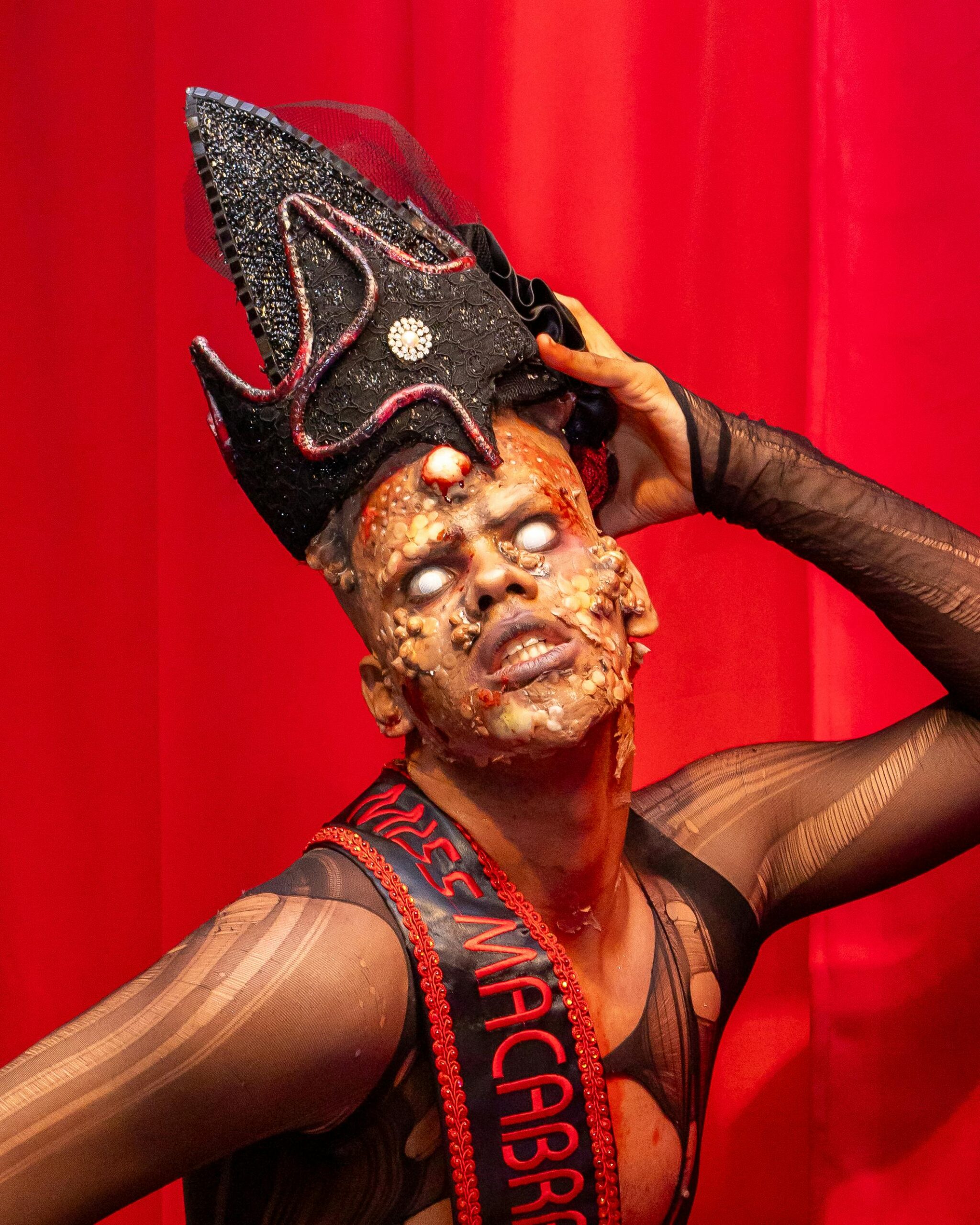
I love theatre and the arts. My ticket for the South African production of Pretty Woman is booked and I can’t wait! Today I was treated to some theatrics at a surprising venue. I played my part and danced – on the stage – mind you, to gay abandon, throwing caution and inhibition to the wind. It’s fair to say I had a Dionysian experience.
There’s a particular kind of chaos that feels almost… holy. Not the destructive kind, but the kind that loosens the grip of routine and lets something older, wilder slip through. Enter Dionysus — the Greek god who didn’t just flirt with excess, he embodied it.
Nine lives?
Dionysus, also known by his Roman name Bacchus, was the god of wine, fertility, theatre, and ritual madness. His origin story is suitably dramatic: born to a mortal woman, Semele, and Zeus, king of the gods, Dionysus entered the world twice — once in tragedy, and once quite literally sewn into Zeus’s thigh to complete his gestation. If ever there were a metaphor for rebirth, resilience, and bending the rules of biology, this is it.
Hedonistic bliss
But Dionysus wasn’t just about a good vintage and a better party. His followers — the Maenads — were known for their ecstatic rituals, abandoning social norms in favour of dance, music, and intoxication. This wasn’t hedonism for the sake of it; it was release. A shedding of the rigid structures that defined everyday Greek life. In a society obsessed with order and reason, Dionysus represented the necessary counterweight: instinct, emotion, and the irrational.
Consumption
Of course, as with most myths, there’s a warning tucked into the revelry. King Pentheus learned this the hard way when he tried to suppress Dionysian worship. The result? A grisly end, torn apart by the very forces he sought to control. The message is clear: deny the wild completely, and it may just consume you.
Today, “Dionysian” lives on in language, often paired against its calmer sibling, the Apollonian — a concept popularised by Friedrich Nietzsche. Where Apollo is logic and restraint, Dionysus is passion and abandon. Both are necessary. Too much order, and life becomes sterile. Too much chaos, and it unravels.
So next time you raise a glass or lose yourself in music, remember: you’re not just unwinding. You’re tapping into something ancient. Just… maybe don’t go full Maenad.
Research assisted by AI
The myth of Sisyphus: origin and meaning
Promethean: Firing changes that shift reality: origin of words